
Table of Contents
- Understand the Stylist’s Core Principle
- Master the Rule of Focal Points
- Use Proportion and Scale Strategically
- Build a Versatile Accessory Wardrobe
- Use Belts to Define Silhouette
- Layer Jewelry With Intention
- Choose Bags as a Functional Style Statement
- Don’t Overlook Often-Ignored Accessories
- Trust Your Eye, Then Edit
- Accessorizing as a Skill, Not Just Instinct
The difference between an outfit that looks assembled and one that looks intentional often comes down entirely to accessories. Professional stylists rarely rely on expensive clothing alone—they build looks around a handful of deliberate accessory choices that pull everything together.
Understand the Stylist’s Core Principle
Accessories Finish the Story an Outfit Starts
Clothing sets the foundation, but accessories communicate personality, occasion, and intention. A simple outfit with the right accessories can look more polished than an elaborate one left unaccessorized, which is why stylists treat this step as essential rather than optional.
Balance Is More Important Than Quantity
Professional styling isn’t about adding as much as possible—it’s about achieving visual balance, where each piece earns its place rather than competing for attention with everything else in the outfit.
Master the Rule of Focal Points
Choose One Statement Piece at a Time
Stylists typically build an outfit around a single standout accessory—a bold necklace, an eye-catching bag, striking earrings—rather than layering multiple statement pieces that compete rather than complement each other.
Let Everything Else Play a Supporting Role
Once a focal point is chosen, remaining accessories should stay simpler and more understated, reinforcing the outfit rather than pulling attention away from the intended centerpiece.
Use Proportion and Scale Strategically
Match Accessory Size to Outfit Silhouette
Delicate, fitted outfits generally pair well with finer, more understated accessories, while looser or more voluminous silhouettes can support bolder, chunkier pieces without looking overwhelming.
Consider Body Proportions Thoughtfully
Stylists often adjust accessory placement and scale to complement individual proportions—a longer necklace to elongate a shorter torso, for instance—using accessories as a tool for balance rather than an afterthought.
Build a Versatile Accessory Wardrobe
Invest in Neutral, Adaptable Pieces First
A well-chosen collection of neutral bags, belts, and jewelry forms a flexible foundation that pairs with a wide range of outfits, making it easier to accessorize thoughtfully without needing an item for every single look.
Add Statement Pieces Selectively
Once the neutral foundation exists, a few bold, distinctive pieces—a colorful bag, patterned scarf, unique jewelry—offer versatility for standing out without requiring an extensive, cluttered collection.
Use Belts to Define Silhouette
Creating Shape With a Simple Addition
A well-placed belt can add structure and definition to looser silhouettes, instantly making an outfit feel more considered rather than simply thrown on.
Belts as Color or Texture Contrast
Beyond shaping an outfit, a belt in a contrasting color or texture can introduce visual interest to an otherwise simple look without requiring a completely different outfit.
Layer Jewelry With Intention
Mixing Metals Confidently
Contrary to older style rules, mixing gold and silver is now widely embraced by stylists, provided it’s done with some consistency—repeating both metals throughout an outfit rather than isolating them to a single piece.
Layering Necklaces for Depth
Combining necklaces of varying lengths adds visual depth and interest, particularly effective with simpler necklines that have enough visual space to support the layered effect.
Choose Bags as a Functional Style Statement
Matching Bag Formality to Occasion
A structured bag typically reads more formal, while a slouchy or textured option feels more casual, making bag choice one of the fastest ways to shift an outfit’s overall formality up or down.
Color as an Easy Accent
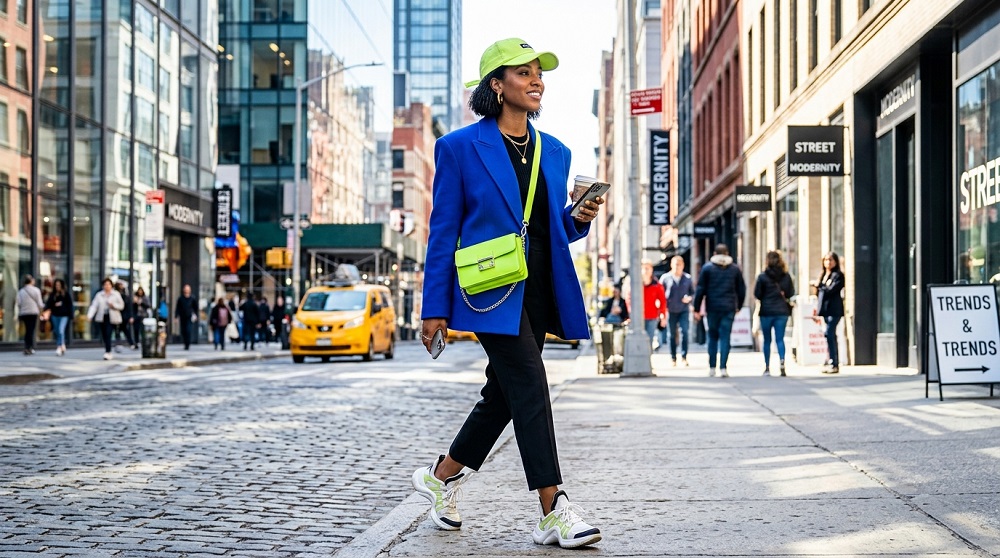
A bag in an unexpected color can serve as the outfit’s primary pop of color, allowing the rest of the look to remain simple while still feeling deliberately styled.
Don’t Overlook Often-Ignored Accessories
Scarves as Versatile Tools
Scarves can be worn multiple ways—around the neck, tied to a bag, wrapped as a headband—offering flexibility that few other accessories provide for the same relatively small investment.
Socks and Small Details Matter More Than Expected
Small, easily overlooked details like patterned socks or subtle hair accessories often contribute more to an outfit’s overall polish than their minor role would suggest.
Trust Your Eye, Then Edit
The Final Step Stylists Rarely Skip
Before finalizing a look, professional stylists often remove one accessory from an outfit that feels complete, testing whether the look still holds together, a habit that consistently prevents overaccessorizing.
Accessorizing as a Skill, Not Just Instinct
Like any skill, thoughtful accessorizing improves with practice and attention. Once these principles become habit, choosing the right accessories stops feeling like guesswork and starts functioning as the quiet, reliable finishing touch that separates a good outfit from a genuinely polished one.