

Table of Contents
- Flight Overview: Detroit to Tokyo
- Why Delta Flight DL275 Diverted LAX
- Safety First: Standard Aviation Protocols
- Why Los Angeles International Airport (LAX)?
- How the Diversion Played Out
- Safe Arrival at LAX
- Passenger Experience and Support
- Technical Insights: Importance of Anti-Ice Systems
- Delta’s Official Response
- Aftermath and Operational Implications
- Conclusion
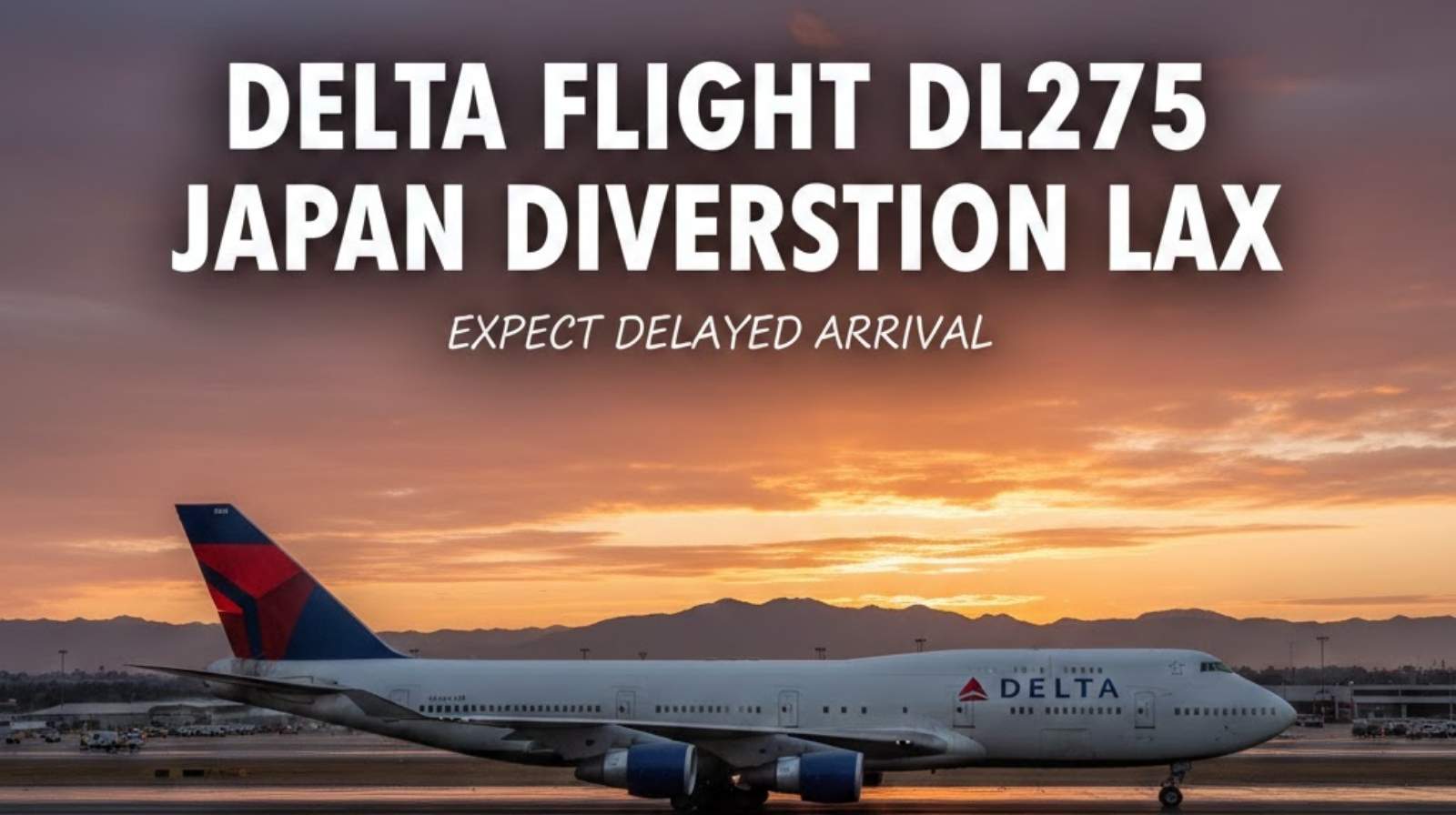
On May 27, 2025, delta flight dl275 japan diversion lax became one of the most discussed aviation incidents involving a long-haul trans-Pacific crossing. The flight, operated by Delta Air Lines, was traveling from Detroit to Tokyo when a technical malfunction in a critical safety component prompted a precautionary diversion to Los Angeles International Airport.
The aircraft, an Airbus A350-900 powered by Rolls-Royce Trent XWB engines, experienced abnormal behavior related to its engine anti-ice system. This article provides a comprehensive look at the incident—from operational decisions and aviation safety protocols to passenger handling and aircraft maintenance implications—offering deeper insights into why such diversions occur and how global airlines manage them safely and efficiently.
Flight Overview: Detroit to Tokyo
Delta Flight DL275’s Original Plan
Delta Flight DL275 is part of Delta Air Lines’ daily international service connecting Detroit Metropolitan Wayne County Airport (DTW)—a major Delta hub in the Midwest—to Tokyo Haneda Airport (HND), one of Japan’s busiest international gateways. This Detroit to Tokyo route represents a vital trans-Pacific crossing for business travelers and connecting passengers heading into Asia.
The aircraft assigned on May 27, 2025, was an Airbus A350-900, a long-haul wide-body aircraft known for fuel efficiency and advanced avionics systems. Powered by Rolls-Royce Trent XWB engines, this aircraft type is commonly used on ultra-long-haul routes such as crossings over the North Pacific and near the Bering Sea corridor.
The route typically involves:
- Departure from DTW
- Climb and cruise over Canada
- Routing across the North Pacific
- Descent into Tokyo Haneda Airport (HND)
Long-haul flights such as this require precise flight planning, fuel management, weather tracking, and system redundancy monitoring. Every system onboard is continuously checked by both the flight crew and Delta Operations Center to ensure compliance with aviation safety standards.
On this particular journey, events did not unfold exactly as planned.
Why Delta Flight DL275 Diverted LAX
Technical Issue with Critical System
During the trans-Pacific segment of the flight, the crew detected abnormal behavior involving the engine anti-ice system. The anti-ice system is a critical safety component designed to prevent ice accumulation in the engine inlets and key sensors during high-altitude operations, especially in cold air masses over the North Pacific and near the Bering Sea.
Ice buildup at cruising altitude can affect engine airflow and overall performance. While modern aircraft are designed with system redundancies, any technical malfunction related to engine anti-ice requires immediate attention.
Reports indicate that the flight crew observed system irregularities but did not declare a full emergency. Instead, following established diversion protocols, they coordinated with air traffic control and the Delta Operations Center to determine the safest and most operationally feasible airport on the West Coast.
The decision was precautionary. No engine failure occurred. However, when a system connected to Rolls-Royce Trent XWB engines behaves outside normal parameters, airlines prioritize safety first over schedule integrity.
Safety First: Standard Aviation Protocols
Aviation safety operates on layered decision-making principles. When abnormal system indications occur, the crew follows a structured checklist. These protocols include:
- Identifying the malfunction.
- Executing onboard procedures from the aircraft manual.
- Communicating with the Delta Operations Center.
- Evaluating diversion airports.
- Coordinating with air traffic control.
These steps reflect global aviation safety standards regulated by international aviation authorities.
For long-haul flights crossing remote oceanic regions, early decision-making is essential. Continuing toward Tokyo Haneda Airport (HND) would have meant several additional hours over water. Diverting to Anchorage, Alaska is sometimes an option for trans-Pacific routes, but weather, runway availability, and maintenance facilities influence the choice.
The diversion protocols used in this case reflect the industry’s conservative approach—prevent risk rather than react to escalation.
Why Los Angeles International Airport (LAX)?
Strategic Geographic Position
Los Angeles International Airport, located on the West Coast, serves as a major international gateway and a strong operational base for Delta Air Lines. Its position makes it a preferred diversion point for flights traveling between North America and Asia.
Maintenance and Technical Support
LAX offers:
- Extensive maintenance facilities
- Certified engineers trained on Airbus A350-900 systems
- Access to specialized tooling
- Engine specialist support for Rolls-Royce Trent XWB engines
Unlike smaller diversion airports such as Anchorage Alaska, LAX provides the infrastructure needed for advanced system inspection and diagnostics.
Passenger Handling Efficiency
As one of the largest airports in the United States, Los Angeles International Airport can efficiently manage international arrivals requiring customs immigration processing. This becomes crucial for a diverted international service flight.
Additionally, Delta operates multiple onward flights from LAX, allowing faster passenger rebooking options compared to smaller airports.
How the Diversion Played Out
In-Flight Crew Actions
After identifying the technical malfunction, the flight crew informed passengers calmly, emphasizing safety first procedures. The aircraft began a controlled descent and route adjustment toward the West Coast.
Throughout the diversion, communication occurred between:
- The cockpit
- Air traffic control
- Delta Operations Center
- Ground maintenance teams
Passengers were informed that the diversion was a precautionary measure due to a system inspection requirement.
Landing and Immediate Aftermath
On May 28, 2025, at approximately 1:38 AM local time, the Airbus A350-900 landed safely on Runway 06R at Los Angeles International Airport.
The landing was routine and uneventful. Emergency vehicles were positioned as a precaution, standard practice for international diversions involving system anomalies.
Safe Arrival at LAX
Following arrival, the aircraft was directed to a gate for further evaluation. At that point:
- Maintenance crews boarded the aircraft.
- Certified engineers began system inspection.
- The aircraft was temporarily grounded for diagnostics.
No injuries were reported. The safe arrival highlighted the effectiveness of aviation safety systems and crew coordination.
Passenger Experience and Support
Travel disruption is inevitable when a long-haul flight diverts. However, Delta Air Lines activated passenger support procedures designed for such incidents.
Passengers experienced:
- Assistance with customs immigration processing
- Customer service support desks at LAX
- Hotel accommodations where necessary
- Passenger rebooking on onward flights
Because LAX is a major Delta hub, alternative connections were available within hours. For international travelers, Delta coordinated re-accommodation on subsequent daily international service departures to Tokyo Haneda Airport (HND).
While delays can be frustrating, structured emergency planning ensures minimal long-term impact on passenger travel plans.
Technical Insights: Importance of Anti-Ice Systems
Role of Anti-Ice on Long-Haul Flights
On high-altitude long-haul flights, aircraft frequently encounter freezing atmospheric conditions. The engine anti-ice system prevents ice accumulation in the engine nacelles and sensor systems.
The system functions by redirecting warm bleed air from the engines to vulnerable areas, preventing hazardous ice buildup. On a trans-Pacific crossing—particularly near polar routing corridors like the Bering Sea—anti-ice reliability is crucial.
If the system displays abnormal behavior, pilots must treat it seriously. While not immediately catastrophic, prolonged exposure to icing conditions without full system reliability increases risk.
The Airbus A350-900 design includes monitoring sensors that detect even minor discrepancies. This technology allowed early identification of the issue, reinforcing aviation safety standards.
Delta’s Official Response
Delta Air Lines confirmed that Delta Flight DL275 diverted LAX as a precaution due to an engine anti-ice system indication. The airline emphasized that the crew followed standard diversion protocols and that passenger safety remained the top priority.
Delta also stated that:
- The aircraft underwent a full system inspection.
- Engine specialist teams evaluated Rolls-Royce Trent XWB engines.
- The plane remained aircraft grounded until cleared.
Such transparency helps maintain public trust in Delta’s international service operations.
Aftermath and Operational Implications
Aircraft Maintenance
After landing, certified engineers performed detailed diagnostics using specialized tooling. Inspections included:
- System pressure checks
- Sensor calibration validation
- Software diagnostics
- Physical inspection of engine components
The maintenance crews determined corrective measures before returning the Airbus A350-900 to service.
Flight Rescheduling
Passengers originally scheduled to land in Tokyo Haneda Airport (HND) were accommodated on alternative Delta international service departures. Flight rescheduling procedures included:
- Automated rebooking
- Coordination with partner airlines
- Accommodation vouchers
Because Detroit Metropolitan Wayne County Airport (DTW) serves as a key Delta hub, future Detroit to Tokyo departures continued with minimal operational ripple effects.
Conclusion
The diversion of Delta Flight DL275 demonstrates how modern aviation prioritizes safety over schedule. A technical malfunction involving a critical safety component triggered standard precautionary measure responses, resulting in a safe landing at Los Angeles International Airport.
From the coordinated efforts of the flight crew and air traffic control to the rapid deployment of certified engineers and maintenance facilities, the incident highlights the strength of global aviation safety frameworks.
While travel disruption impacted passengers temporarily, structured emergency planning, robust maintenance crews, and Delta’s operational capacity ensured continuity of international service.